Caviar is usually associated with blini, toast, potatoes, or other classic savory bases.
That is exactly why this kind of serving feels so interesting. When the combination is done carefully, fruit can give caviar a completely different setting without taking away its elegance.
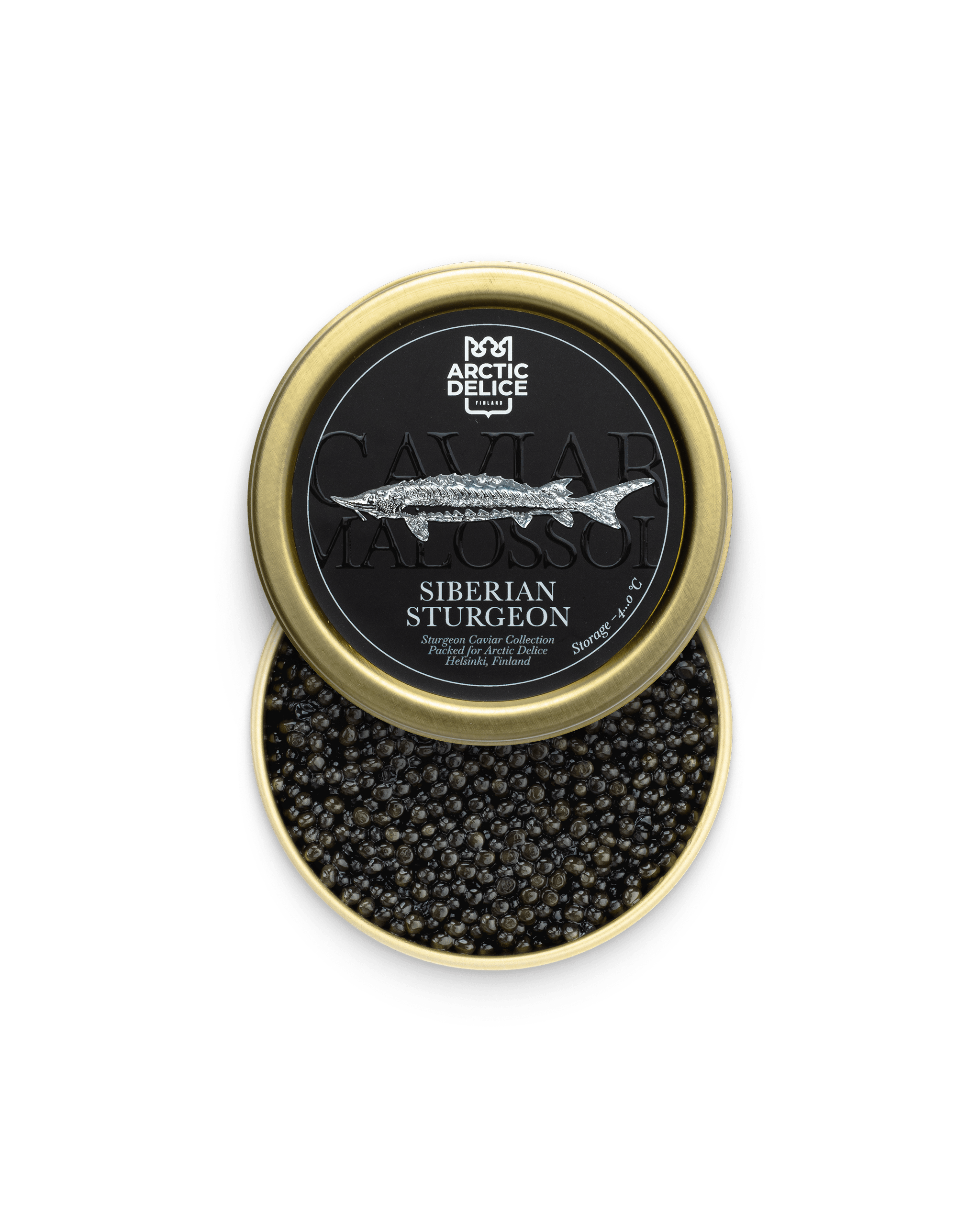
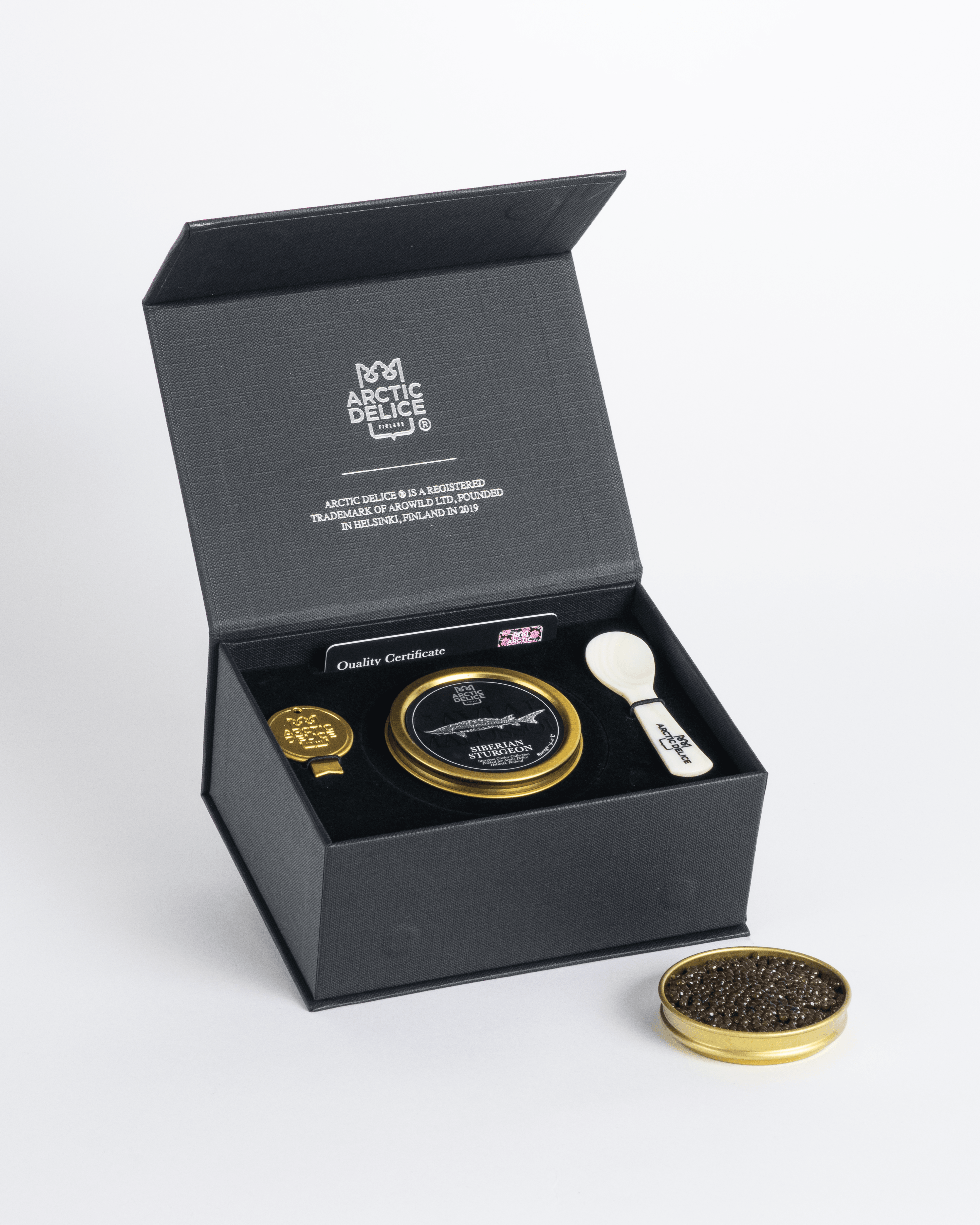
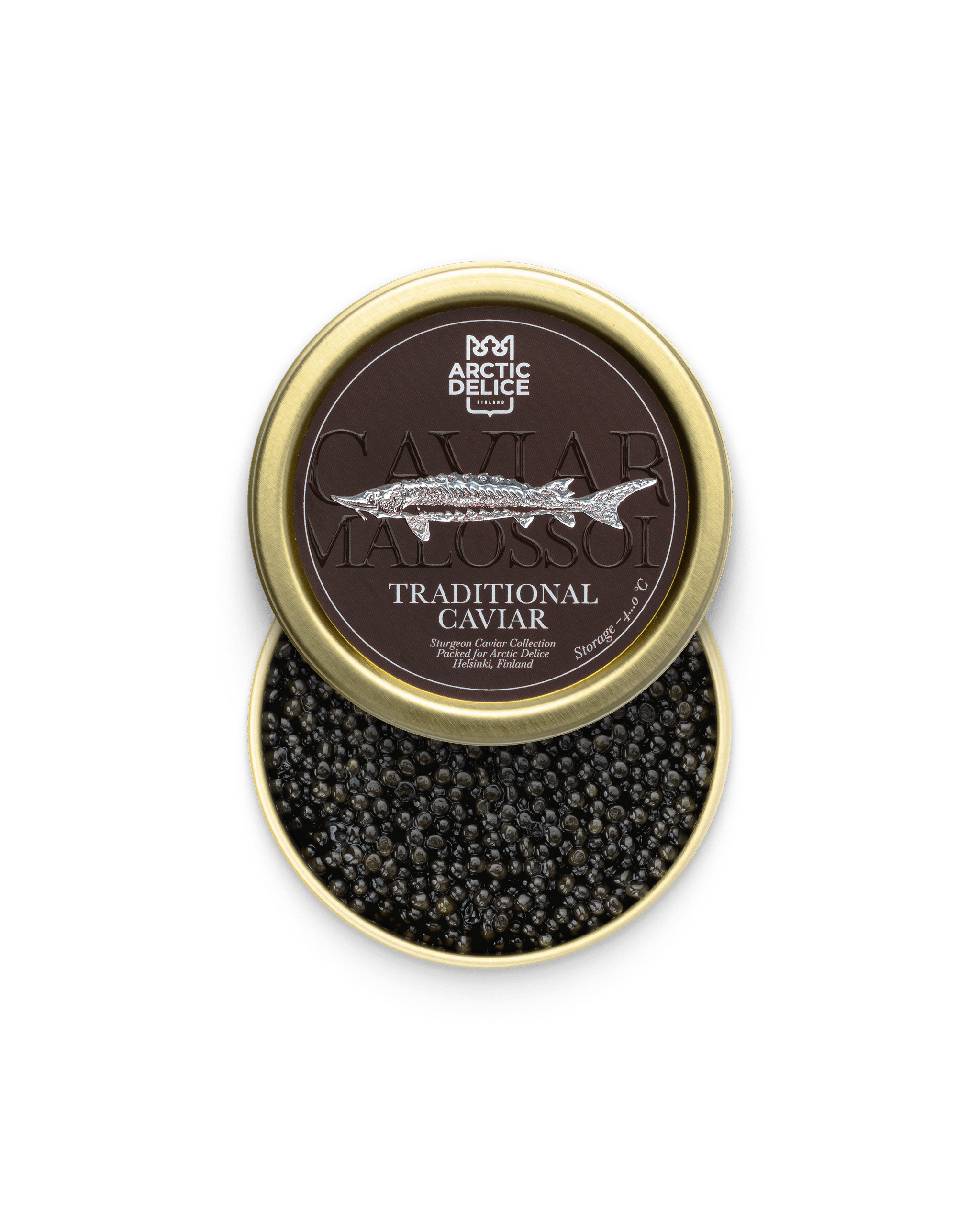
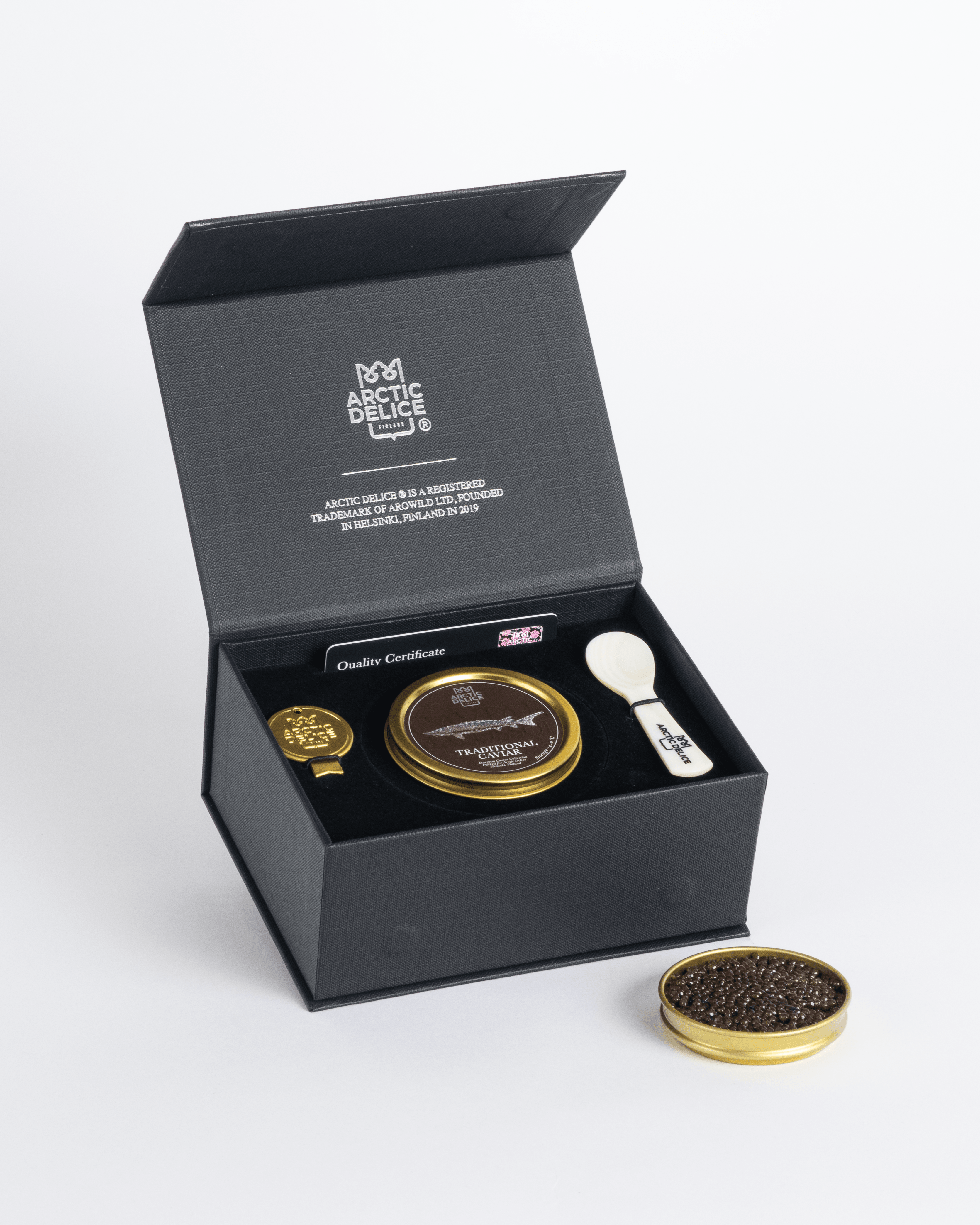
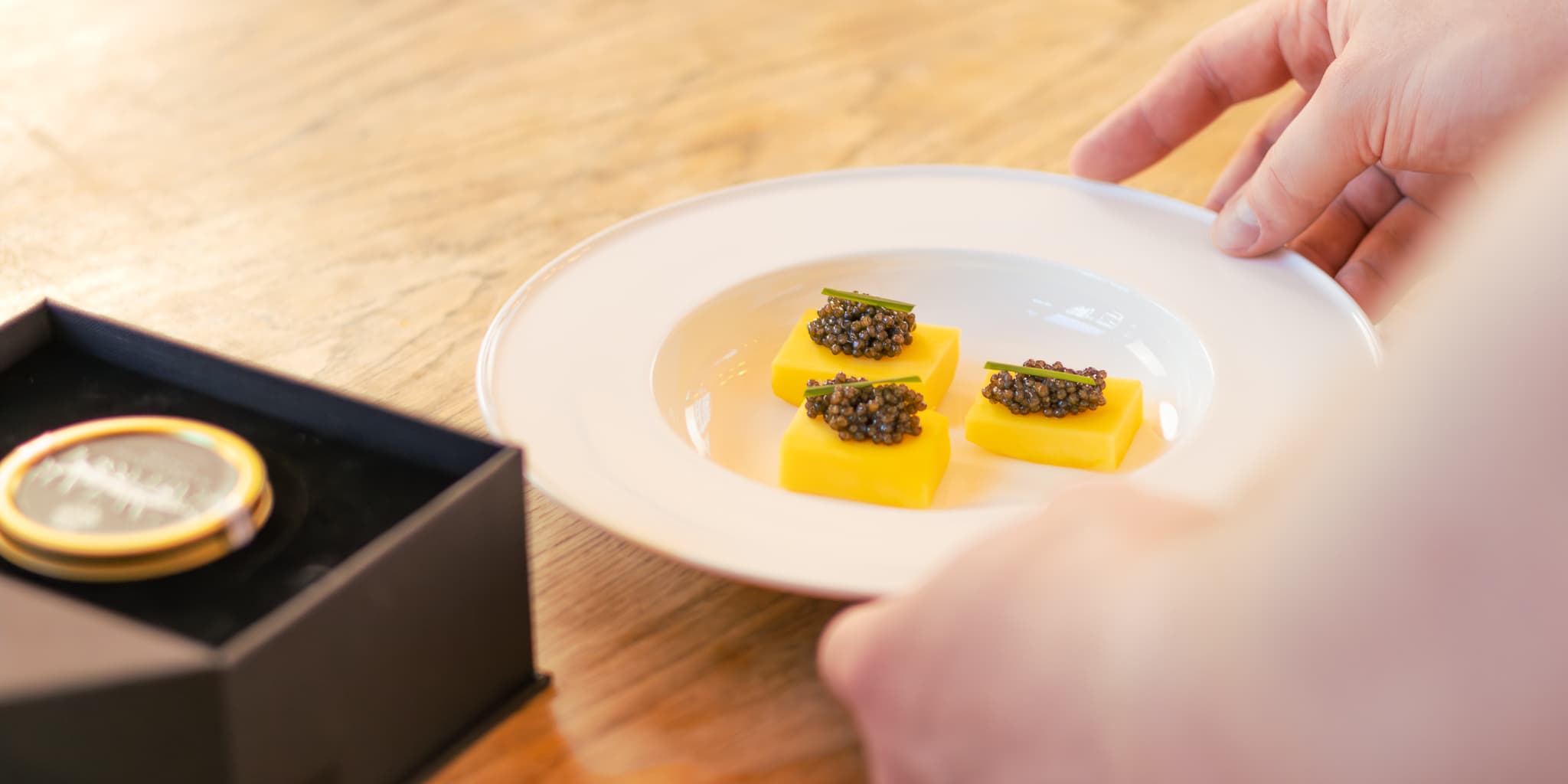
For this recipe, we used Traditional by Arctic Delice®, a Siberian sturgeon caviar, and served it on neat mango pieces finished with a small touch of green onion or chive. The result was simple, fresh, visually striking, and unexpectedly balanced.
Black caviar on bright yellow mango, finished with a little green, creates a combination that looks especially beautiful on a white plate. The contrast is clean and modern, and the flavors are much more natural together than many people first expect.
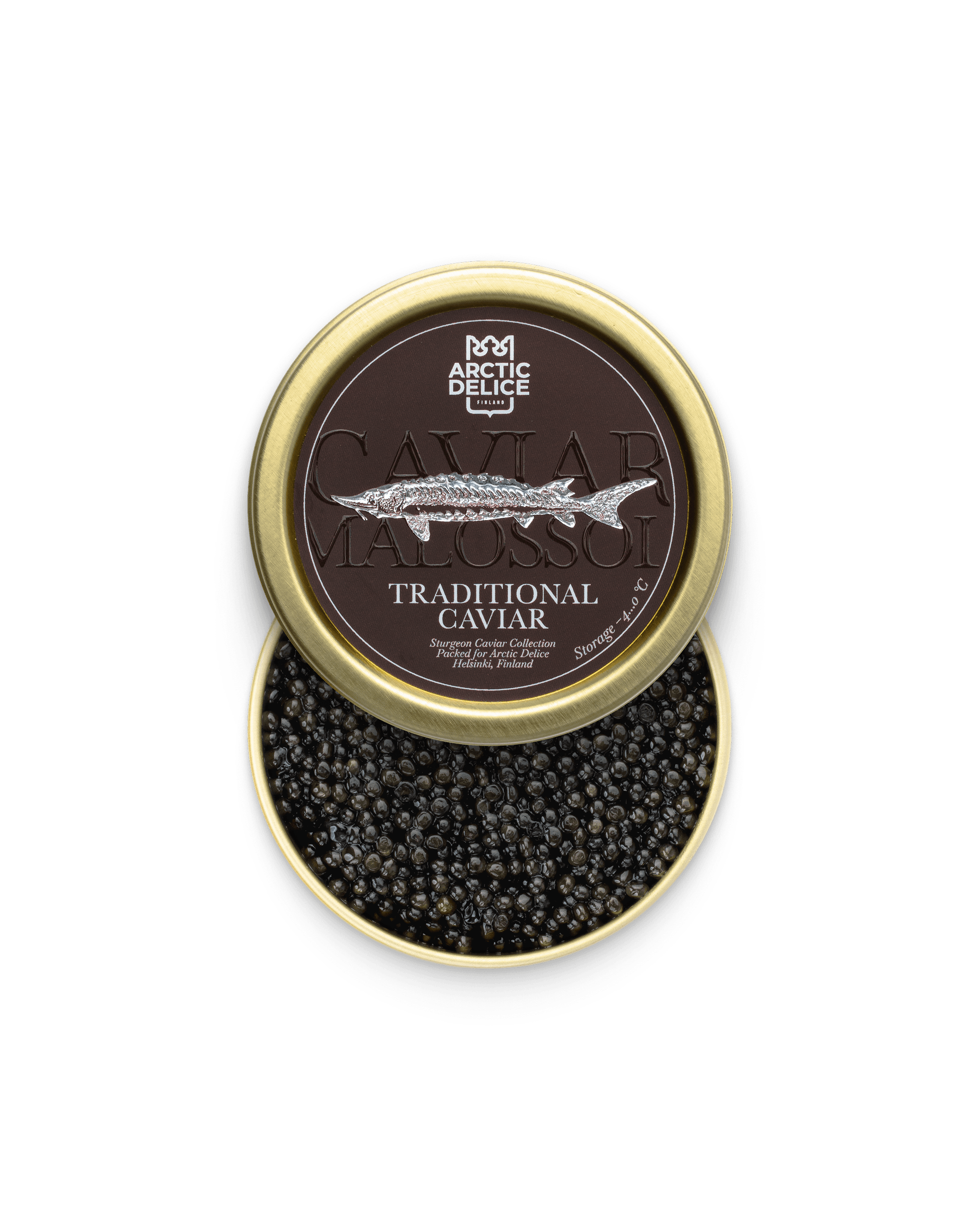
Traditional Sturgeon
Why caviar works with fruit
Caviar brings salt, depth, texture, and marine umami. Fruit, when chosen well, brings freshness, sweetness, and acidity.
That contrast is the whole point.
If the fruit is too sharp, too watery, or too fragrant, it can overpower the caviar. But mango works differently. A good ripe mango has softness, gentle sweetness, a smooth texture, and enough body to carry the caviar well. It does not fight the caviar. It supports it.
Instead of making the bite feel like dessert, mango creates a softer and brighter base. It helps the caviar feel more open, more modern, and more surprising, while still letting the roe remain the most luxurious part of the bite.
This is one of those combinations that sounds unusual at first, but makes a lot of sense once you taste it.
The role of Traditional by Arctic Delice®
Traditional by Arctic Delice® works especially well in this format because it has the kind of clear caviar structure that can hold its place against fruit without becoming too heavy.
The mango gives sweetness and softness. The caviar brings the salt, the pop, and the savory depth. The small green garnish then adds a final fresh note and keeps the bite from feeling too round.
The result is balanced, polished, and memorable.
Ingredients
- 1 ripe mango
- Traditional by Arctic Delice®
- Finely cut chive or a very thin mild green onion stem
- Optional: a chilled white plate for serving
Choosing the right mango
The mango matters a lot here.
It should be ripe and slightly soft, but not overripe.
If it is too hard, the texture will feel too firm and the sweetness will not be developed enough. In that case, the fruit will feel unfinished and the caviar will sit on top of something that has not yet reached the right flavor.
If it is too soft, it becomes difficult to cut cleanly. The flesh starts to collapse, the edges lose shape, and instead of a neat serving piece you get something closer to a paste.
For this recipe, the best mango is one that gives slightly under gentle pressure but still keeps its structure when sliced.
If the mango is not ready yet
Leave it at room temperature for a day or two, depending on how firm it is. That is often enough to bring it to the right stage.
If you want to speed the process up a little, keep it in a paper bag for a short time. Once it reaches the right softness, use it fairly soon.
How to cut the mango
This recipe is really about clean cutting and proportion.
We cut the mango into rectangular pieces, about:
- 3 cm long
- 1.5 cm wide
- 1 to 1.5 cm high
They are not perfect cubes. They are more like small rectangular blocks.
That size works well because it gives enough surface for the caviar while still staying elegant and easy to eat in one bite.
From one good medium mango, you can usually make about 4 pieces of this size that feel neat and usable for plating. Of course, there will still be quite a lot of mango flesh left around them. That is completely normal. It does not mean anything is wasted — it just means this recipe uses only the cleanest and most presentation-friendly pieces. The remaining mango can simply be eaten separately or used in another dish.
How much caviar to use
For each mango piece, use about:
- 1 heaped small spoon
- or 1.5 more ordinary small spoonfuls
That amount gives the bite the right caviar presence. It should not look like a tiny garnish. It should feel intentional and generous enough that the caviar remains the center of the experience.
Place it gently on top so the shape stays clean and the pearls remain visible.
The final garnish
Finish each bite with a small piece of very fine green garnish — something like chive or a thin green onion stem.
In our serving, the garnish was about 2 cm long and kept very delicate.
It does not need to bring strong onion flavor. It is there to add freshness, a little lift, and visual contrast. Because the bite already has sweetness from mango and salinity from caviar, only a light green note is needed.
Assembly
- Choose a ripe but still structured mango.
- Peel it and cut it into neat rectangular pieces, about 3 x 1.5 cm and 1–1.5 cm high.
- Place the mango pieces on a white plate or another very clean surface.
- Top each piece with about 1 heaped small spoon, or around 1.5 regular small spoonfuls, of Traditional by Arctic Delice®.
- Finish with a thin green garnish about 2 cm long.
- Serve immediately.
Why the presentation works so well
This recipe is visually strong in a very simple way.
The yellow mango, black caviar, and green garnish create a color combination that looks especially elegant on a white plate. It feels bright, modern, and luxurious without needing extra decoration.
This matters because caviar recipes often benefit from restraint. When the colors and structure already look clean and striking, there is no need to add unnecessary elements.
Other fruits that could work
Mango is one of the best choices because it has body, sweetness, and softness without too much acidity. But the general idea can also work with a few other fruits if used carefully.
Possible alternatives include:
- ripe but firm peach
- melon with a clean, mild profile
- very soft pear in carefully cut pieces
- avocado, if you want to move back toward a less fruity and more savory direction
Still, mango remains one of the strongest options because it gives both visual contrast and flavor balance in a very natural way.
A final note
This is a very simple recipe, but it makes a strong impression because the contrast is so clear and so well controlled.
The mango gives sweetness, softness, and shape.
The caviar gives salinity, umami, and elegance.
The green garnish gives freshness and a final visual lift.
That is all you need.
And when it is served neatly, this unusual combination stops feeling unusual very quickly — it just feels beautiful, balanced, and worth repeating.