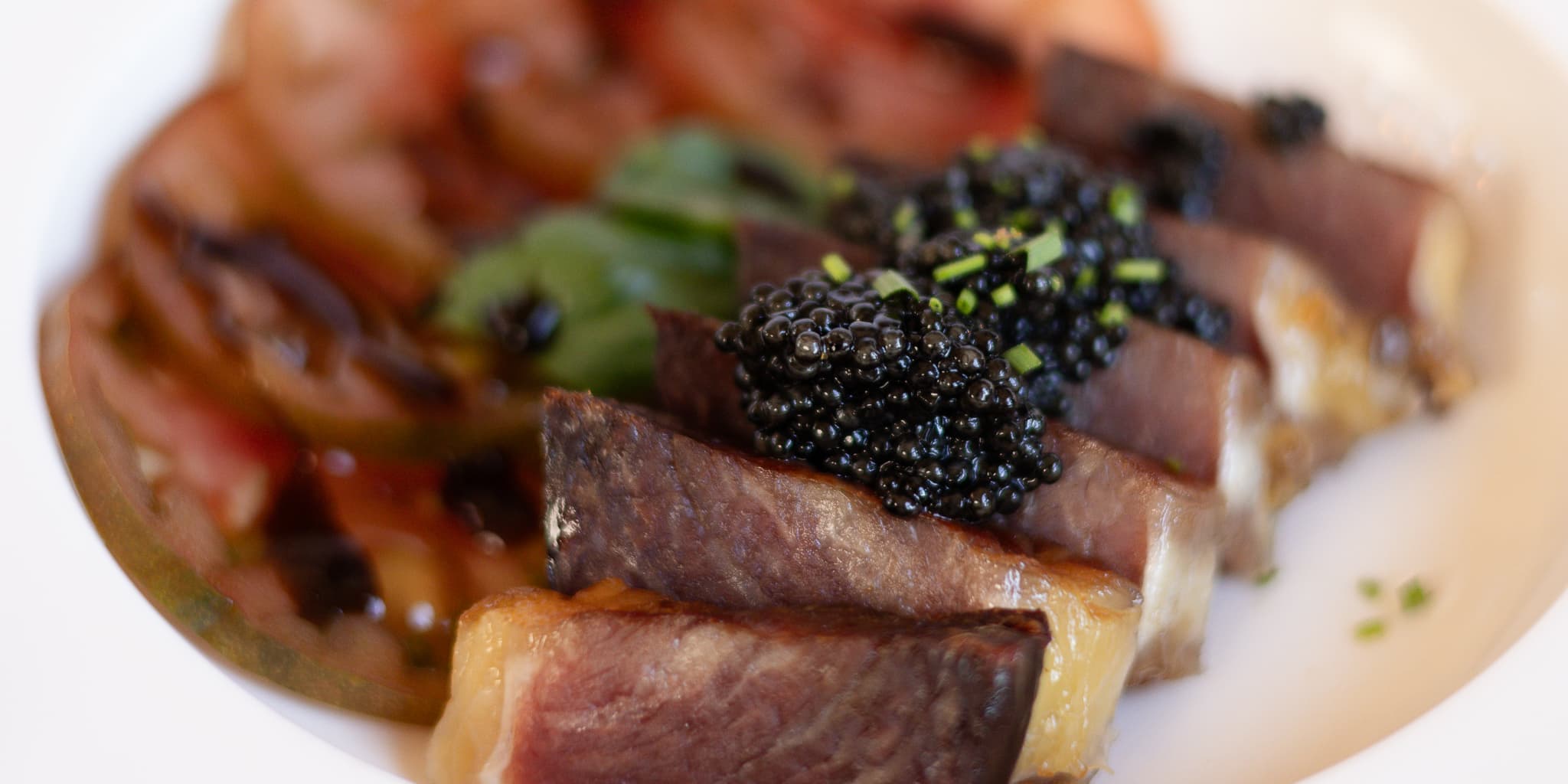
Some caviar recipes are built around delicacy. This one is built around contrast.
For this serving, we used Nordic Heritage by Arctic Delice® with slices of dry-aged beef, thin-cut tomatoes, basil, olive oil, and two kinds of balsamic: white and dark. The plate was finished with a little finely cut green onion. It may sound like a bold combination, and it is — but when the balance is right, it works remarkably well.
Caviar with meat is not as unusual as some people think. In high-end dining, including Japanese-inspired service, caviar is often paired with premium beef because the two products can support each other beautifully. Rich meat gives depth and warmth. Caviar adds salinity, texture, and a more polished finish. When both are handled with restraint, the result feels luxurious rather than excessive.
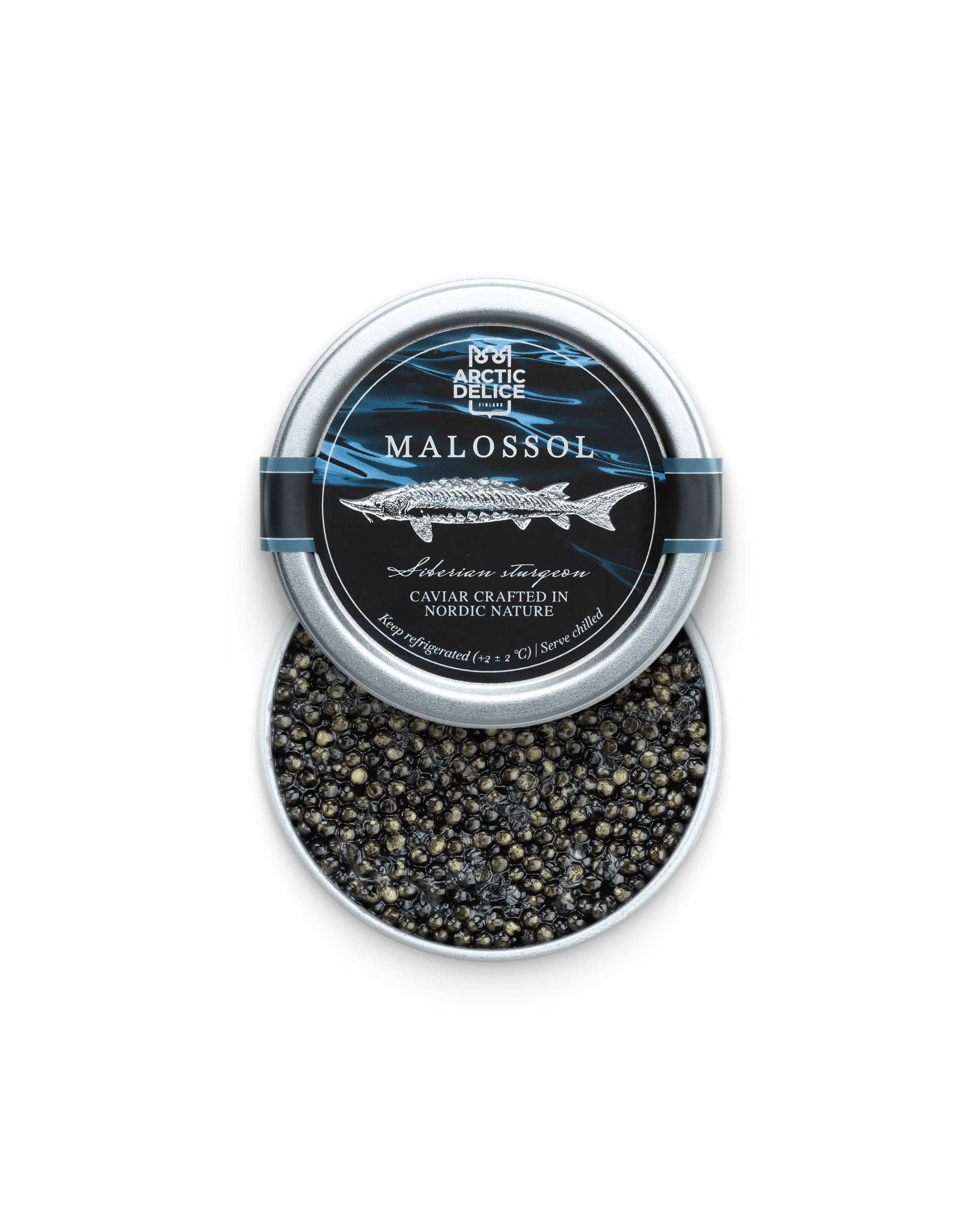
Nordic Heritage
Why Nordic Heritage works here
Nordic Heritage by Arctic Delice® is a Swedish caviar from Småland, and in this recipe its stronger saline profile is actually an advantage.
The steak already brings richness and deep umami because it is dry-aged. The tomatoes add freshness and acidity. The balsamic gives sharpness, sweetness, and a little complexity. Against all of that, the caviar needs enough presence to stay visible on the palate.
Nordic Heritage does exactly that.
Its saltier and more defined profile means it can sit on top of the meat without disappearing. It does not get lost in the dry-aged flavor. Instead, it acts almost like the final seasoning of the dish — but in a far more elegant way than simple salt would.
That is why, in this preparation, the meat was not salted separately.
The caviar already carried that role.
Why this combination works
This plate is really built around three movements:
- the richness of the dry-aged beef
- the freshness of the tomato and basil
- the salinity and texture of the caviar
The steak gives body and depth.
The tomato keeps the plate alive and prevents it from becoming too dense.
The caviar lifts the meat and finishes the bite.
Without the tomatoes, the dish could feel too dark and too heavy.
Without the steak, the caviar would not have enough depth under it.
Without the caviar, the dish would feel incomplete and more ordinary.
That is why the composition works.
The steak
We used dry-aged beef, aged for about a month, and prepared it on a kitchen grill.
A pan also works very well here, and a controlled indoor grill is probably one of the best options. An open flame grill is possible, but not ideal in every case. Too much smoke can easily become an extra flavor that pulls the dish away from its balance. In this recipe, smoke is not the main idea. The dry-aged beef already has depth. The caviar already has character. The tomatoes and balsamic already bring contrast. A strong smoky note can start to compete with all of that.
So the better approach is usually:
- kitchen grill
- clean grill surface
- or a pan with good heat control
The steak should be cooked with care and then sliced thinly enough to feel elegant on the plate. It should not be presented as a heavy whole steak experience. It should be part of a composed caviar dish.
The cut we used was not especially fatty, although it had a small fat edge. That worked very well. A little fat is not a problem here. In fact, it can help support the caviar. What matters more is that the meat is not overwhelmingly fatty or too aggressively seasoned.
And again: do not salt the meat much, or at all, before final plating if the caviar is already carrying the salinity.
The tomatoes
The tomatoes are more important than they first appear.
They were sliced thinly and arranged as a light base or side element on the plate. Their job is not to dominate, but to refresh. They lighten the dish visually and in taste, and they create a cleaner transition between beef and caviar.
Use tomatoes that are:
- ripe
- firm enough to slice cleanly
- not too watery
Very watery tomatoes can make the plate messy and dilute the balsamic.
The balsamic
We used two kinds of balsamic:
- white balsamic
- dark balsamic
This works especially well because each one brings something slightly different.
The white balsamic gives brightness and a cleaner acidic line.
The dark balsamic brings a deeper sweetness and more visual contrast.
Together with olive oil, they make the tomatoes feel finished without turning them into a full salad.
The key is restraint. The tomatoes should be lightly dressed, not soaked.
Basil and green garnish
Basil works naturally here because it brings freshness, a little sweetness, and a soft aromatic lift that fits both tomato and beef.
The finely cut green onion added on top gives one last point of freshness and color. It should stay very light and delicate. The goal is not onion flavor as such, but a final green note that keeps the plate visually alive and gives a little bite at the end.
Ingredients
- Dry-aged beef steak
- Thinly sliced ripe tomatoes
- Olive oil
- White balsamic
- Dark balsamic
- Fresh basil
- Nordic Heritage by Arctic Delice®
- Finely chopped green onion or a similar delicate green garnish
How to prepare it
1. Cook the steak
Grill or pan-cook the dry-aged beef with care.
Do not over-season it. In this recipe, the caviar is already doing a lot of the seasoning work.
Let the meat rest properly before slicing.
2. Slice the tomatoes
Cut the tomatoes into thin slices and arrange them neatly on the plate.
Drizzle lightly with olive oil, then add a small amount of white balsamic and dark balsamic. The effect should feel clean and elegant, not heavy.
Add a few basil leaves or torn basil pieces.
3. Slice the beef
Cut the steak into neat slices. They should be thin enough to feel refined, but thick enough to still carry the texture of the meat.
Arrange the slices beside or partly over the tomatoes depending on the style of plating.
4. Add the caviar
Place Nordic Heritage by Arctic Delice® on top of the steak slices.
The amount should be generous enough to matter in every bite. This is not just decoration. The caviar should clearly participate in the structure of the dish.
5. Finish the plate
Add a small amount of finely cut green onion over the top. Keep it light and elegant.
Serve immediately.
What to avoid
A few things can easily make this recipe less successful:
- too much smoke from open-fire grilling
- over-salting the beef
- too much balsamic
- watery tomatoes
- heavy sauces
This plate does not need a cream sauce, pepper sauce, or other steakhouse-style additions. They would fight the caviar and flatten the contrast that makes the recipe work.
Possible variations
If you wanted to adjust the recipe slightly, a few options could still work:
- a different premium beef cut with moderate marbling
- a lighter herb instead of basil
- very thin radish instead of tomato for a more minimal plate
- a tiny amount of very restrained Japanese mayonnaise, but only if used carefully
Still, the tomato version is especially strong because it gives acidity, color, and freshness without becoming too technical.
Why the plate looks so good
Visually, the dish is very effective.
You have:
- pale tomato flesh
- dark beef
- black caviar
- green basil and onion
- all on a light plate
That contrast makes the whole composition feel elegant, modern, and slightly dramatic without needing extra decoration.
A final note
This recipe proves that caviar does not need to stay only in the world of blini and seafood.
With the right steak, careful slicing, fresh tomato, and a caviar like Nordic Heritage by Arctic Delice®, the result can feel surprisingly natural — rich, fresh, structured, and very memorable.
It is a bold combination, but not a chaotic one.
When done well, it tastes exactly like what a good caviar recipe should feel like: unexpected at first, and completely convincing once you try it.